Last Updated: May 1, 2026
The importance of hydration in older adults
As we get older it is important for us all to maintain a healthy lifestyle, a much looked over part of that is to stay hydrated. The body is 60% water and staying hydrated is important for your body to maintain bodily functions. Keeping yourself hydrated helps regulate body temperature, keep joints lubricated, transport nutrients and compounds in the blood, and much more. However, as we get older our body isn’t as good at retaining water making this more difficult.
Recommended fluid intake
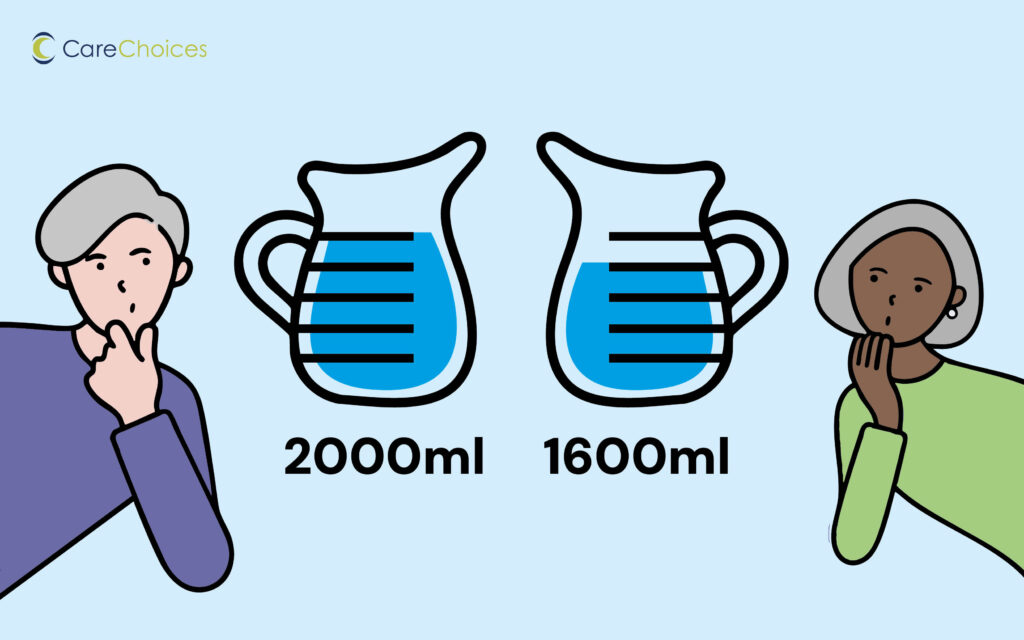
The British Dietetic Association (BDA) recommends that adult men should drink 2l and women should drink 1.6l of water each day. The association says that roughly 70-80% of our water needs is taken in the form of drinks, including things like tea or squash, and the remaining 20-30% comes from food.
Top tips for staying hydrated
1. Tracking – Try using a water bottle or pint glass so you can easily measure how much water you’re drinking throughout the day.
2. Try flavouring your water – use cordial, squash or even cut up some fruit and herbs like lemons, limes, strawberries, mint etc. to make water a little more exciting.
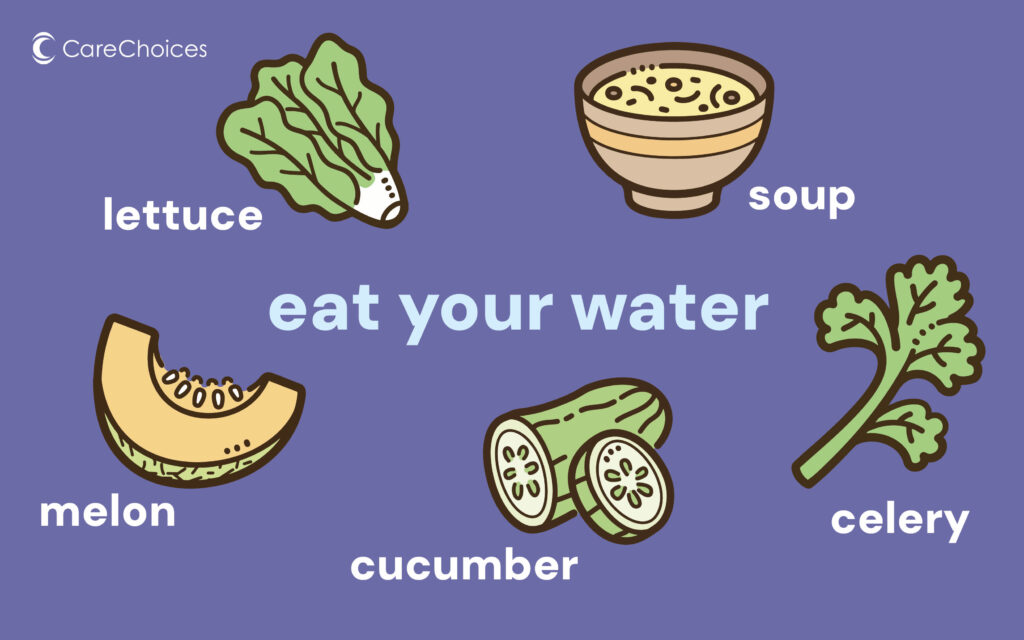
3. Eat your water – lots of foods have a high-water content: melon, cucumber, lettuce, celery and soup all have a very high-water content and can help keep your hydration levels up.
4. Make it a challenge – challenge your friends, carer, family members to reach a drinking goal. A little healthy competition never hurt anyone and can make drinking water a lot more fun.
5. Take it on the go – similar to the first tip, invest in a good water bottle so you can take your drink with you when you are out and about. An insulated bottle is a good idea for the summer months as it will keep it cool.
6. Mix it up – nobody said you only have to drink water to stay hydrated; tea, coffee, squash, juice and even fizzy drinks adds to your hydration. Of course, water is best, but adding in something fun like a can of your favourite fizzy drink for every few glasses of water you drink is a great way to keep things interesting and you hydrated.
7. Little and often – chugging a litre all at once will, unfortunately, not do much for your hydration, it will most likely fill your bladder too quickly leading to you urinating much
faster than if you had drunk that litre over the period of a few hours. The key to hydration is to drink little but often. Have a few sips here, a few sips there to ensure you are getting the most out of what you are drinking.
Why it’s important to prevent dehydration
It is important to keep an eye out for dehydration in yourself or someone you care for. Being dehydrated can cause a multitude of health problems including fatigue and dizziness which can lead to falls, it can cause issues with your kidney function and gut, among other things. Namely dehydration can lead to:
- Headaches
- Tiredness
- Confusion
- Lack of concentration
- Constipation
- Urinary Tract Infections
Recognising the signs of dehydration
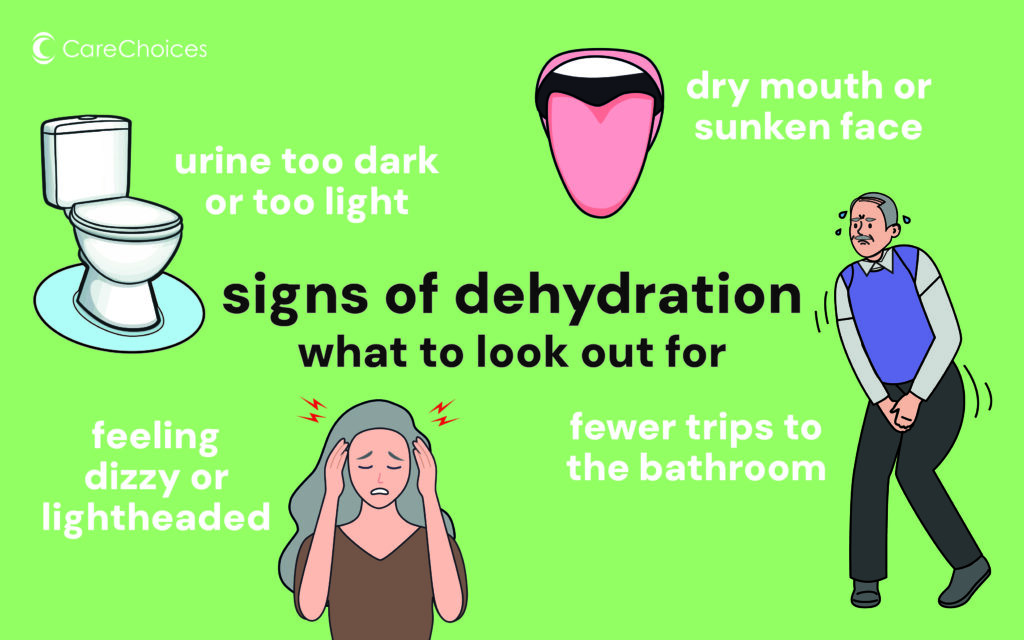
It is so important for older people and those caring for them to keep an eye on hydration levels. A sense of thirst alone is not a useful measure of one’s hydration levels as when we have a drink, we may stop feeling thirsty before our body is completely rehydrated. Below are some key signs of dehydration to look out for.
1. Monitor your urine – checking the colour is a very useful indicator of hydration, it should be a pale straw-like colour. Your urine being too dark or too light in colour is a sign of dehydration. It also shouldn’t smell very strongly.
2. Going to the bathroom – Keep an eye on how often you go to the bathroom. Urinating less often than usual is a sign that you aren’t drinking enough.
3. Feeling dizzy, lightheaded or tired – If you have feelings of dizziness, light-headedness or are more tired than usual you may not be drinking enough.
4. Dry mouth – Your tongue, lips and mouth feeling dry is a sign of dehydration. Although it is important to note that this feeling of dry mouth, or feeling thirsty, may go away quickly after having a drink but you may not be rehydrated.
5. Check your face – Less bounce in your skin, sunken eyes, and chapped lips are all key signs of dehydration.
Addressing common hydration challenges
Awareness
Being aware of the challenges faced by older and/or disabled people and the signs of dehydration are the first steps in helping those we care about to stay hydrated. We can’t address a problem we aren’t aware of after all.
Those at higher risk
It is important to acknowledge that older adults and those with care needs due to physical and/or learning disabilities face unique challenges when it comes to staying hydrated. It may be difficult for them to access water, express that they are thirsty or keep hold of a cup in order to drink. People in these groups may require assistance with drinking and may have an increased risk of dehydration due to medical conditions or medication. People may also reduce how much water they are drinking due to fears of incontinence, especially at nighttime or when out and about. In actuality, being dehydrated may make incontinence worse because the salts in a dehydrated person’s urine may irritate the bladder more than the urine of a hydrated person.
The impact of medications
Be aware of medications that can heighten dehydration, such as blood pressure medication, antihistamines, and diabetes medication, just to name a few. If you know the person you care for is taking one of these medications, you can ensure they increase their water intake to make up for the potential loss caused by them.
Unique challenges for older adults
As we get older, the signs of dehydration such as dry mouth, a sense of thirst and urine colour may be more subtle and thus harder to notice. This is why keeping track of how much fluid a person is drinking is so important. It is the easiest way to ensure that an older person has the right fluid intake to stay hydrated.
Here comes the sunshine – Seasonal hydration tips
With summer on the way, high temperatures and humidity can lead to more sweating which in turn leads to a higher chance of dehydration and even heatstroke. In the summer months, it is important to drink more fluids and eat foods with a high water content to ensure you stay hydrated.
Avoiding the sun by sitting in the shade along with wearing loose-fitting, breathable clothing can help reduce sweating which can help you to stay hydrated in the heat.
Remember, everything counts!!
Exploring beverage options
The temperature of the drink, whether it be hot, cold, iced, or lukewarm doesn’t change how much you are drinking. Water is the healthiest thing you can drink to stay hydrated; it has no calories or sugar making it a great vehicle for hydration. However, this doesn’t mean that fruit juice, squash, coffee, tea, or milk doesn’t count. Caffeine has a diuretic effect making you urinate more often, sure, however that small effect doesn’t mean that your coffee or tea won’t add to your hydration – you’re still drinking 250ml, 300ml, or however big or small your mug is, worth of fluid. Mixing in a little squash or cordial is a great way to make water more interesting and will most likely entice you to drink more.
A special tip for anyone who has made it this far – if you have a sweet tooth and love to drink something fizzy more often than you should, a great way to skate this craving is to switch out your still water for sparkling when you mix up a glass of cordial or squash. It gives the same effect as having a fizzy drink as you get the bubbles with not as much sugar and the flavour can be tailored to suit you.
For more advice on how to stay hydrated click here or checkout the BDA’s advice for older people on staying hydrated here.