Last Updated: August 13, 2026
The number of older people in the UK is climbing fast, and with it comes a simple but pressing question: how do we help them live well, not just longer? Many older adults want to stay in their own home, in familiar surroundings, with their own front door and their own kettle. But safety worries, health complications, and loneliness can chip away at that independence.
As people age, they may face specific challenges such as reduced mobility, hearing loss, or increased risk of falls, and technology can help address these age-related issues. Elderly people living at home often have unique needs that require tailored solutions to support their safety and independence.
Technology is sliding into the picture as a quiet partner. Sometimes it’s as simple as a video call to a daughter hundreds of miles away. Other times it’s an app on a smartwatch that quietly checks heart rate in the background.
For concerned family members, these solutions help address concerns about the safety and well-being of their loved ones. The benefit of technology is clear: it supports independence and improves the quality of life for older adults.
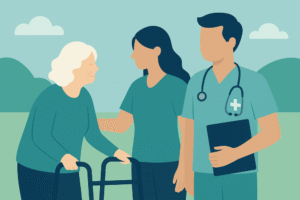
The internet is foundational for many of these tech solutions, enabling communication, monitoring, and access to services. New technology is continually emerging to meet the evolving needs of older adults. These tools help both seniors and their family members stay informed about health and safety.
Technology also helps elderly people stay connected with friends, family, and loved ones, reducing loneliness and isolation. Ultimately, these advances are providing peace of mind for both seniors and their families. Taken together, these bits of tech for elderly care are rewriting the rules of how we think about support in later life.
Why Innovation Matters Now
By 2035, one in four of us in Britain will be over 65. That’s not a distant statistic; it’s only a decade away. Many older people are already living alone, and the traditional care structures creak under the weight of demand. Families and carers are stretched, while the system itself struggles to deliver personalised, timely care.
Technology solutions must be tailored to fit the lifestyle and daily routines of older adults, ensuring that support aligns with their individual needs and habits.
It isn’t just about pills or check-ups anymore. It’s about making daily life feel safe, restoring peace of mind, and allowing an elderly person to feel confident that they can handle the day on their own terms.
Research shows that innovative tech solutions in elderly care can significantly improve safety, independence, and overall well-being for seniors.
Artificial Intelligence and Machine Learning in Care
Artificial intelligence sounds futuristic, but it’s already in play. Think of AI less like a robot brain and more like a pattern spotter.
- Predictive analytics: By crunching health data, AI can flag when an older person might be drifting toward a fall or a medical emergency. It gives carers a chance to act before things spiral. In emergencies, AI can also trigger an alarm, alerting carers or emergency services for immediate response.
- Chronic condition support: Machine learning apps quietly log heart rate, blood pressure, even medication patterns, nudging when something seems off.
AI doesn’t stop at charts and graphs. It powers the fall detection inside personal alarms, sending instant alerts to carers or family when a stumble turns serious. Some AI-powered devices even let users speak directly with carers or emergency responders, providing real-time communication for enhanced safety.
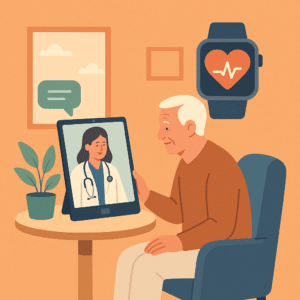
Telehealth and Remote Monitoring
Video calls are nothing new, but for an 82-year-old who struggles with bus rides to the GP, they can be a lifeline. Telehealth now means routine consultations, therapy sessions, and even medication reviews can happen without leaving the house. These technologies help older adults communicate more easily with healthcare providers and family, ensuring support and connection. That saves not only energy but also the risk of missed care for those with limited mobility.
Wearable gadgets push it further. A smartwatch checking oxygen levels. A pendant logging steps and sleep. These apps share data in real time with carers or health professionals, building a picture of well-being that’s far richer than a hurried GP note. Remote monitoring systems, often paired with tablets or smartphones, keep families in the loop even if they’re scattered across the country. A tablet can be handy for telehealth appointments and staying connected with loved ones. Seniors can also use tablets to watch videos for entertainment or to keep informed about health topics and news.
Smart Home Technologies
The smart home isn’t just about fancy thermostats. For elderly living, it’s becoming the backbone of independence.
- Motion sensors that know when someone hasn’t moved in hours.
- Automated lighting that clicks on when feet hit the floor at 2 a.m.
- Amazon Alexa answering questions, reminding about medication, or simply being asked to play music that lifts the mood.
- Personal alarms integrated with smart home systems, providing immediate assistance in emergencies and enhancing overall safety.
Add in doorbell cameras that let someone see who’s knocking, or an app that helps with grocery shopping, and you start to see how tech weaves itself into daily life. For an older person living alone, these systems can feel like invisible scaffolding steadying, without being intrusive.
Pair those gadgets with home adaptations, such as stairlifts, grab rails, and widened doorways, and you get houses that are not only safer but also more welcoming for carers and friends who come to visit. Smart home adaptations also make it easier and safer for a friend to drop by, supporting social connections and emotional well-being.
| TECHNOLOGY | EXAMPLE DEVICES/SYSTEMS | BENEFITS FOR OLDER PEOPLE | BENEFITS FOR FAMILY & CARERS |
|---|---|---|---|
| Artificial Intelligence | Predictive health apps, fall detection | Early warnings, personalised care | Fewer emergencies, better planning |
| Telehealth & Video Calls | GP consultations, online therapy | Easier access, less travel | Regular contact, reduced stress |
| Wearable Devices | CPR Guardian IV, fitness trackers | Tracks heart rate, falls | Real-time alerts, reassurance |
| Smart Home Systems | Alexa, motion sensors, automated lighting | Safer routines, reminders, entertainment | Reduces worry, helps monitor behaviour |
| Personal Alarms | SureSafeGO, Buddi wristband | Immediate help, more independence | Peace of mind when elderly people are living alone |
| Assistive Robotics | Companion robots, robotic pets | Eases loneliness, supports dementia care | Frees time, boosts emotional well-being |
| Home Adaptations | Stairlifts, widened doorways with smart locks | Better mobility, safer movement | Easier access for carers and emergency staff |
Robotics in Elderly Care
Robots still sound futuristic, but walk into some UK care homes and you’ll find them already in action. Not metal humanoids, but softer, subtler companions.
Some are robotic pets that blink, purr, and respond to touch, calming residents with dementia. Others remind someone to take their medication or play music to start a conversation. A few carry small items, sparing frail arms from strain.
Residents often warm to them quickly, perhaps because the robots never rush, never judge, and always repeat themselves with the same patience. They don’t replace human carers, but they do ease loneliness and give staff a breather.
Personal Alarms and Assistive Devices
For all the fancy tech, personal alarms remain the workhorses of elderly care. Today’s versions are a far cry from the old “button on a string.” They pair alarms with GPS tracking, mobile phone connectivity, and even automatic fall detection. Some send pings straight to family apps when something goes wrong.
Take the CPR Guardian IV smartwatch: it tracks heart rate, detects falls, and lets you call up to five contacts. The SureSafeGO, meanwhile, offers pendant or watch options and GPS safe-zone alerts. For older people living alone, these are lifelines, discreet, powerful, and reassuring.
Other assistive devices are just as vital: hearing aids tuned via smartphone apps, tablets simplified to make video calls less daunting, or systems that make communication with loved ones almost effortless.
The Hurdles: Challenges and Considerations
Of course, not every shiny gadget solves a problem. Some create new ones.
- Digital barriers: Plenty of older people struggle with tablets or smartphones. Without patient teaching, the tech sits unused in a drawer.
- Privacy worries: Sharing health data online sparks concern, especially when it’s unclear who can access it.
- Cost: A smart home kit or companion robot doesn’t come cheap. Families and councils will need creative funding models to spread access fairly.
And carers need time to learn the systems too. A gadget that complicates daily routines can end up gathering dust.
Looking Ahead
The future of elderly care probably isn’t one miracle device, but a patchwork: AI quietly scanning health data, a smartwatch feeding updates to a GP, a robot offering companionship in the evening, a smart home adjusting lights and locks automatically.
On the horizon are things like:
- Virtual reality sessions to stimulate memory in dementia.
- Sensors that track subtle shifts in behaviour before crises strike.
- Voice assistants fine-tuned for elderly speech patterns and hearing loss.
The drive now is toward simplicity, making devices easy enough for an 89-year-old with arthritis and visual impairments to use confidently.
Final Thoughts
Technology won’t replace care. It can’t hug, or laugh at a half-remembered story, or sit quietly by a bedside. But it can ease strain, provide peace of mind, and help older adults hold on to the independence they value.
For families, carers, and healthcare staff, embracing these tools isn’t optional anymore; it’s the way forward. The more we weave useful technology into daily life, the safer and richer the lives of older people in the UK will become.